





 ABOUT US
A Guide to Sleeping Safely After Hair Transplant Surgery
Learn how to sleep after hair transplant surgery with a day-by-day guide covering pillows, neck support, and safe recovery timing.
Learn how to sleep after hair transplant surgery with a day-by-day guide covering pillows, neck support, and safe recovery timing.


|
|
|
Author |
|
|
Profile |
A specialist in DHI (Direct Hair Implantation) hair transplant techniques, graduated from the University of Birmingham. He learned advanced hair transplantation techniques under the guidance of Dr. Tayfun Oguzoglu, a globally renowned hair transplant expert. Trusted by numerous patients, Dr. Jirayu has established a reputation for excellence in the field of hair restoration. |
|
Date |
August 20, 2026 |
|
Share |


|
Key Takeaways
The safest approach to how to sleep after a hair transplant is on your back with the head raised at roughly 30 to 45 degrees for the first 7 to 10 nights, using stacked firm pillows, a wedge, or a recliner. New grafts have no independent blood supply on day one and need to sit undisturbed while they anchor into the scalp. A U-shaped travel pillow helps prevent unconscious rolling, and most patients return to their usual sleeping position between night 10 and night 14 once the surgeon confirms healing is on track.
Sleep is crucial for hair transplant success in the initial two weeks. New grafts are small, fragile injuries that are kept in position by a thin blood clot. The pressure or rubbing of a pillow on the scalp can dislodge a graft before it can secure itself.
If you have a procedure lined up, here’s what to know about how to sleep after hair transplant surgery night by night, choosing the right position and angle for the proper recovery, and how to use pillows and neck support in a way that protects the transplanted area without wrecking your sleep quality.
On the first day after a transplant, whether the technique used was FUE or DHI Micrograft, each graft sits in a channel in the scalp without its own blood supply. A small clot holds it in place, and the graft survives on plasma from the surrounding tissue until new blood vessels grow in over the following week.
Because the region is sensitive, any rubbing from a pillow, a quick head movement, or sleeping face-down during this period can cause a graft to detach before it has set. Therefore sleep has unique post-surgery guidelines, distinct from general scalp wound-care instructions regarding washing and contact.
Expect mild redness, small scabs forming over each graft, and tenderness across the recipient area for the first few days. Forehead swelling is common and usually peaks around day three or four before settling. Sleeping flat tends to make morning swelling more noticeable, which is one of the practical reasons the head-raised position is recommended in the early nights.
None of this is unusual, but the combination of tender scalp and post-op swelling is a good reminder that this is not a normal week for your pillow.
The general recovery window sits around 7 to 14 nights, but the level of care shifts as the grafts settle.
Here is a night-by-night guide most patients can follow, keeping in mind that the surgeon who placed the grafts should always have the final word for your specific case.
Sleep on your back only, with the head raised at 30 to 45 degrees. A recliner works well, and stacked firm pillows or a wedge pillow are practical alternatives. The transplanted area should not touch any surface. This is the stretch where accidental contact carries the highest risk, so the setup matters more than comfort.
Swelling generally starts to settle, and you can start adjusting the incline down slightly. Back-sleeping still continues at this point. Itching is common at this stage, but scratching should be avoided; use a saline spray or the product provided by the clinic.
Some patients start testing cautious side sleeping once the surgeon confirms the scabs are lifting naturally and healing is on track. This is a case-by-case call, not a fixed date.
The average patient is back to a familiar sleeping position by this point. However, larger sessions or dense DHI placement in a visible area like the hairline may need a longer window before side or stomach sleeping resumes.
Getting the pillow setup right makes a real difference in whether your head stays in position overnight.
A U-shaped travel pillow, worn for roughly the first week to 10 nights, is one of the more useful pieces of kit. Its job is not to raise the head, but to stop the head rolling to the side without you noticing. Treat it as part of the elevation setup rather than replacing it.
Two or three firm pillows stacked deliberately hold the incline better through the night than a single soft one, which tends to compress and slide by morning. A wedge pillow is a step up in stability, and a recliner is the most consistent option if you own one. Whatever the setup, firm materials are preferred as they hold shape overnight better.
Strive to use a fresh pillowcase every day. For the first couple of nights, lay a clean towel over the pillow to catch any minor drainage or serous fluid without needing a full change of bedding. These habits help reduce the risk of anything settling against the grafts.
A brief, unconscious shift onto the side a few nights in does happen, but it rarely causes lasting damage, especially once the initial anchoring window has passed. In the morning, check for anything unusual like unexpected bleeding, a graft that looks visibly out of place, or new pain that was not there the day before.
If any of that shows up, contact the clinic promptly rather than waiting to see whether it settles.
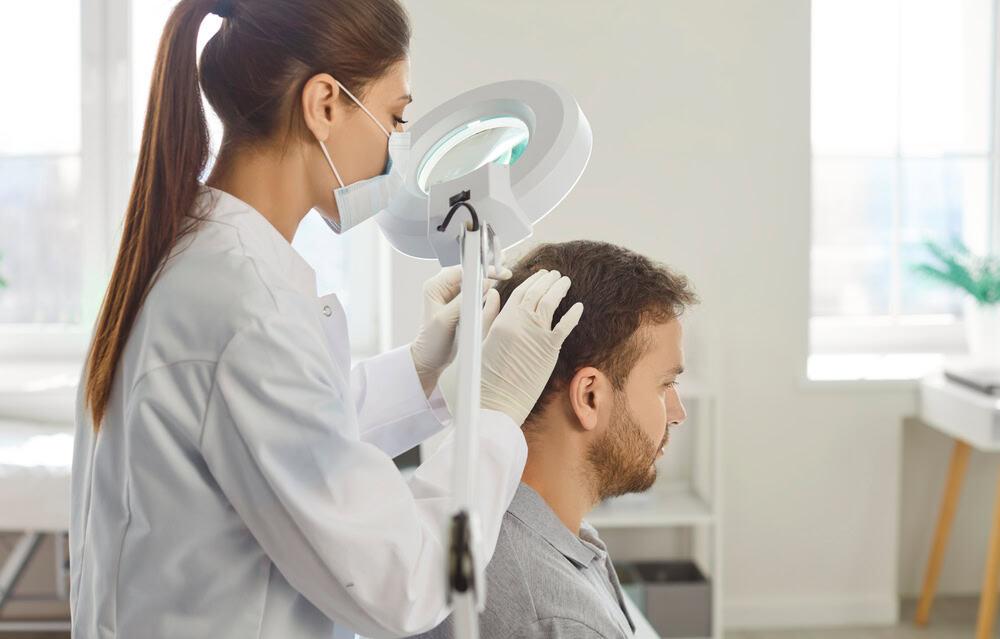
Sleep is one piece of the aftercare picture. The other parts are adhering to the washing schedule the clinic gives you, temporarily avoiding alcohol and strenuous exercise, and keeping to the follow-up appointments where the surgical team checks how the grafts are settling.
The reason these instructions are grouped is that they all protect the same delicate window: the first two weeks, when the transplanted follicles are anchoring and starting to build their own blood supply.
Taking the right approach to how to sleep after hair transplant matters for recovery, and the general 7 to 14 day window covers most patients, but graft count, session size, technique, and the area treated all shift how long to keep your head elevated and the precautions to follow. Healing times vary between a dense DHI hairline procedure and a crown session with fewer grafts. Your specific recovery timeline can only be assessed by the physician who performed your grafts.
At Bangkok Hair Clinic, the team is led by Dr. Jate Jatechayanon and Dr. Jirayu Jatechayanon, both ABHRS-certified and members of ISHRS, AAHRS, and WFI. Our patients receive structured follow-up appointments through the first year, and we see international and Thai-resident patients through the same aftercare process, so you get the same recovery guidance whether you are healing in Bangkok or back home.
If you are exploring procedure options and DHI hair transplant costs, that conversation is best had once our physicians have assessed your donor area, hair-loss pattern, and treatment goals in a proper consultation.
Book a consultation with us at Bangkok Hair Clinic via Facebook Inbox, LINE OA, or a call today to discuss a personal aftercare plan built around your graft count and technique. We’ll see to it that you receive the best care.
References:
Q: How long do I need to sleep with my head raised after a hair transplant?
A: Most patients keep the head raised at 30 to 45 degrees for the first 7 to 10 nights. Larger sessions or dense placement in visible areas may need a slightly longer window, so follow the specific instructions from your surgeon who placed the grafts.
Q: Can I sleep on my side after a hair transplant?
A: Side sleeping is generally avoided for the first week to prevent pressure and friction against the grafts. A cautious return to side sleeping is often possible from around night 8 to 10, once the surgeon confirms healing is progressing normally.
Q: What happens if I accidentally roll onto my side in the night?
A: A brief, unconscious shift a few nights in rarely causes lasting damage. In the morning, check for unexpected bleeding, a visibly displaced graft, or new pain, and contact the clinic promptly if anything looks off rather than waiting.
Q: Do I really need a neck pillow after a hair transplant?
A: A U-shaped travel pillow is recommended for roughly the first week to 10 nights. It works alongside the head-raised position to prevent the head rolling to the side unconsciously during deeper sleep.
Q: Does DHI Micrograft need different sleep precautions from FUE?
A: The sleep guidance is essentially the same. Both techniques rely on the same anchoring window in the first two weeks, so back-sleeping with the head raised applies whether the grafts were placed using DHI Micrograft or FUE.


