





 ABOUT US
Exosome Hair vs. PRP: Which Method Should You Choose?
What is exosome hair treatment and how does it work? Comparing it to PRP, and choosing the right method to restore thick, healthy hair.
What is exosome hair treatment and how does it work? Comparing it to PRP, and choosing the right method to restore thick, healthy hair.

|
|
|
Author |
|
|
Profile |
A specialist in DHI (Direct Hair Implantation) hair transplant techniques, graduated from the University of Birmingham. He learned advanced hair transplantation techniques under the guidance of Dr. Tayfun Oguzoglu, a globally renowned hair transplant expert. Trusted by numerous patients, Dr. Jirayu has established a reputation for excellence in the field of hair restoration. |
|
Date |
September 17, 2026 |
|
Share |


|
Key Takeaways
Thinning hair, hair shedding, or baldness can be treated with advanced medical innovations that restore hair at the cellular level, with top options including exosome hair therapy and PRP programs.
Exosome hair involves using highly concentrated biomolecular extracts from stem cells that send signals to repair and accelerate new hair growth.
PRP (Platelet-Rich Plasma) uses concentrated platelets extracted from the patient’s own blood, ensuring high safety, zero risk of allergic reactions to foreign substances, and greater cost-effectiveness for ongoing care.
Additionally, GFC (Growth Factor Concentrate) is an advanced evolution of PRP, offering pure Growth Factors at 2–3 times higher concentrations than standard PRP for clear, safe results without relying on external extracts.
Thinning hair, hair loss, or baldness not only destroys daily confidence but also signals that your hair follicles are weak, nutrient-deficient, and deteriorating beyond what regular shampoos can heal. Today, restoring thinning locks using exosome for hair growth has become one of the most closely watched medical alternatives. It is not just nourishment; it sends cellular-level repair signals directly to your roots.
However, amidst the wave of new innovations, many people feel confused and ask: what is exosome hair treatment and how does it work, and how does it compare to PRP—a long-standing and highly safe procedure? This article will help you find the answers so you can choose the most suitable method, whether you are analyzing biological mechanisms or evaluating exosome hair before and after expectations.
Exosomes are microscopic biomolecules with a diameter of just 30 to 150 nanometers—1,000 to 2,000 times smaller than regular cells. Naturally secreted by stem cells, they act as vital intercellular messengers. Inside, they contain over 1,000 types of proteins, cytokines, and growth factors, such as:
When injected into the scalp, exosome hair therapy stimulates dormant hair follicles to produce new hair fibers, repairs degraded cells, extends the hair’s natural growth cycle, and reduces premature shedding.
Despite being an exciting technology, a common question is: who is a good candidate for exosome hair treatment and what specific hair loss conditions does it address? In medical practice, this innovation is typically recommended for individuals facing the following issues:
Because exosomes are cell-free therapy extracts lacking a cell nucleus, the risk of immune system rejection or allergic reactions is relatively low. However, normal, temporary symptoms that may occur following an injection include:
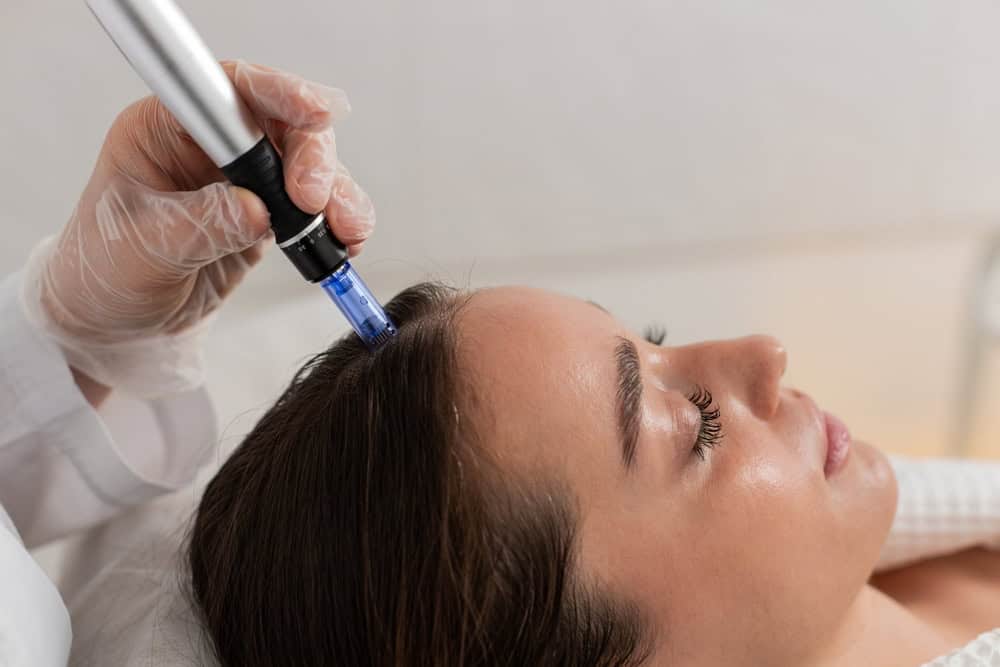
While aesthetic trends and medical innovations constantly evolve, PRP (Platelet-Rich Plasma) injections are still globally praised as a standard procedure with proven, reliable results over the long term.
The fundamental reason is that PRP is an Autologous Therapy—a treatment utilizing biological components derived from the patient’s own blood and tissues to heal and repair themselves. This is a natural mechanism readily accepted by the human body. The cellular-level working mechanism of PRP is just as profound and effective as newer synthetic or cultured technologies.
The PRP process begins by drawing a small amount of the patient’s blood, similar to a routine health check-up. The blood tube is then placed into a centrifuge at a precisely calculated speed and duration to isolate and remove unnecessary red and white blood cells. This leaves only the plasma layer, which possesses a platelet concentration 3 to 4 times higher than normal blood.
When a physician injects this concentrated platelet plasma back into the scalp, the platelets undergo “activation,” releasing various biological molecules, proteins, and familiar Growth Factors to directly repair hair follicles:
Through these biological mechanisms, PRP transforms a barren, nutrient-deficient scalp environment into a fertile one—much like tilling soil and applying premium natural fertilizer directly to the roots. This causes thin, limp hair to naturally become thicker, darker, and enjoy a longer, healthier lifespan.
Due to its high safety profile and natural healing mechanism, PRP addresses a wide range of hair problems, particularly for individuals who:
When evaluating side effects, the greatest advantage of PRP is that the risk of allergic reactions is virtually zero. Because all extracts come entirely from the patient’s own blood, there is no immune rejection, residual toxicity, or adverse reaction to foreign substances—unlike synthetic or lab-cultured external extracts. Normal, temporary symptoms include:
After learning about exosomes, many patients naturally compare them to Platelet-Rich Plasma. When evaluating exosome hair treatment vs PRP which is more effective, understanding their structural and procedural differences can help clarify the right choice for your needs:
| Comparison | PRP (Platelet-Rich Plasma) | Exosome Hair |
|---|---|---|
| Source of Extract | Extracted from the patient’s own blood, centrifuged to isolate concentrated platelets. | Extracted from lab-cultured stem cells with standardized quality and quantity controls. |
| Concentration | Natural levels of Growth Factors produced by the patient’s own body. | Highly concentrated Growth Factors and MicroRNA, refined through specialized cultivation. |
| Allergy Risk | Extremely low risk, as it uses autologous tissue from your own body. | High safety profile, though there is a very slight chance of reacting to preservation agents. |
While exosome hair is an exciting innovation focusing on intercellular signaling, PRP remains the universally accepted and widely practiced choice in international medicine for several key reasons:
If you want the autologous safety of PRP with enhanced potency, Bangkok Hair Clinic recommends our GFC (Growth Factor Concentrate) program. This hair follicle cellular restoration innovation treats thinning hair, hair shedding, and baldness by evolving beyond traditional PRP. Using specialized, proprietary blood collection tubes and advanced technology, GFC stimulates platelets to release pure Growth Factors at a concentration 2 to 3 times higher than standard PRP. Importantly, all nutrients are extracted as an immediately active liquid (Activated Growth Factors) completely free from red or white blood cell contamination. This significantly reduces post-procedure inflammation and effectively prevents infection.
Bangkok Hair Clinic is a premier hair loss clinic in bangkok focusing on root-cause analysis. Our procedures are performed by American Board of Hair Restoration Surgery (ABHRS) certified physicians who evaluate your scalp condition and hairline structure to design personalized treatment plans. Whether utilizing GFC to stimulate weak roots or advanced hair transplants for natural-looking density, we restore your hair’s strength, deliver cost-effective outcomes, and bring back your everyday confidence.
Consult with us to evaluate the best approach for your hair condition at Bangkok Hair Clinic:
References:
Q: How many sessions of exosome hair therapy or PRP are needed to see results?
A: Generally, both exosome hair injections and PRP/GFC treatments show initial improvements in reduced hair shedding within the first 1 to 2 months. Noticeably thicker new hair growth typically becomes evident after 3 to 4 continuous treatments. Reviewing exosome hair before and after cases also reflects this progressive multi-session timeline.
Q: If I have severe hereditary hair loss, can exosome or PRP replace a hair transplant?
A: They cannot entirely replace a transplant. For individuals with advanced baldness where follicles have completely miniaturized or died, permanent hair transplantation is the primary solution. Treatments like exosome for hair growth, PRP, or GFC act as supportive procedures to nourish surrounding hair, increase density, and ensure newly transplanted grafts anchor and grow successfully.
Q: After undergoing exosome hair or GFC treatment, can I continue using my current hair growth medications or sprays?
A: Yes, you can use them to support your treatment results. However, we recommend pausing topical medications or alcohol-based hair sprays for the first 24 hours post-procedure to prevent irritation at the needle insertion sites. Always consult your attending physician to optimize your ongoing medication routine.
Q: What is the post-procedure aftercare for exosome hair or PRP?
A: To ensure the active solutions work at maximum efficiency, physicians generally recommend the following aftercare steps:
Q: Why is autologous platelet therapy still an attractive option despite new innovations like exosomes?
A: The primary reasons are safety from using your own tissue and overall cost-effectiveness. Using your own platelets carries zero risk of allergic reactions to foreign substances. Furthermore, at Bangkok Hair Clinic, our advanced GFC program extracts Growth Factors at 3 times the concentration of standard PRP, delivering deep cellular-level results at an accessible price point that allows for more consistent, ongoing treatment compared to external extracts like exosomes.


